Understanding Your Child’s Genetic Report

When you first receive a genetic report about your child, it can feel like it is written in a completely different language.

Long words. Strings of letters and numbers. Tables full of codes that seem impossible to understand.

Many parents tell us the same thing:

"We have the report… but we don’t really understand what it means."

If this sounds familiar, you are not alone.

This guide is here to help you understand the key parts of a genetic report, so you can feel a little more confident reading it — without needing to become a scientist.

The goal is not to decode every number or technical detail. Instead, we want to help you recognise the main pieces of information, understand the kind of genetic change your child has in the NARS1 gene, and know where to find further support.


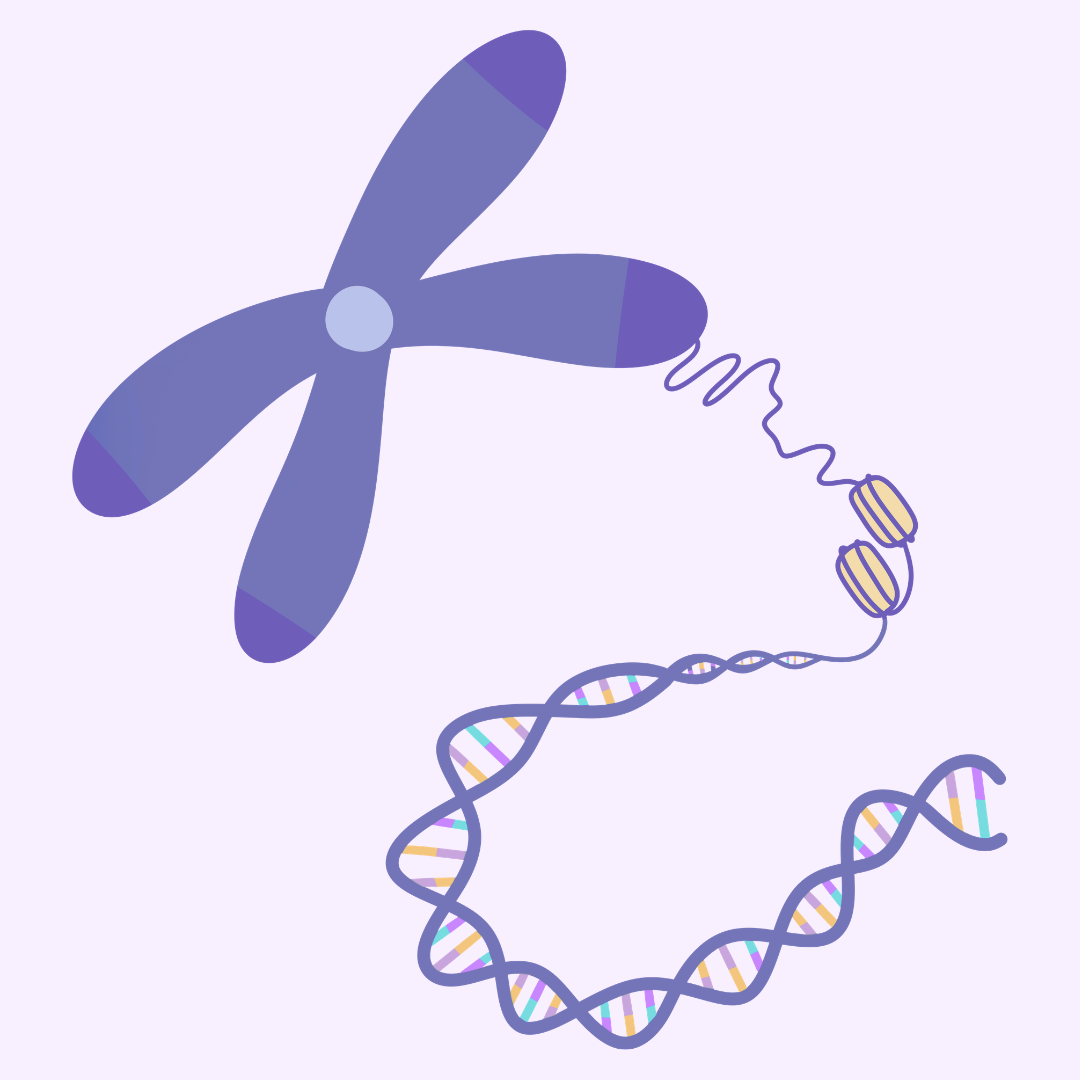
Chromosome and DNA Strand Illustration

A quick recap: DNA, genes and chromosomes

DNA
DNA is the long chemical code that carries all the instructions for how the body grows and works. DNA is a simple alphabet of just four letters: A, C, T and G. 

Genes
DNA is divided into specific sections called gGenes. They are like individual recipes written along the DNA. Each gene tells the body how to make a specific protein that performs an important job.

The NARS1 gene provides instructions for making the NARS1 protein, which helps cells build other proteins that the body needs.

Chromosomes
Chromosomes are like books made of DNA that contain many genes. Humans usually have their whole DNA divided into 46 chromosomes, arranged in 23 pairs. Each parent contributes one set of chromosomes (23) to the child’s 46 chromosomes.

Most genes come in two copies — one inherited from each parent.

If one or both copies of a gene contain an important change (called a variant), it can affect how that gene works and sometimes lead to a health condition.


What a genetic report is really telling you

Although genetic reports can look complicated, they are usually answering three main questions:

  • Which gene is involved and where

  • What kind of change (variant) was found

  • What scientists currently believe that change means

Your report will normally include a table describing the variant or variants identified.

For many NARS1 families there are two variants, one inherited from each parent. In other cases, a variant may appear de novo, meaning it occurred spontaneously in the child/around egg fertilization.


Why some reports show one variant and others show two

There are two main ways NARS1 variants can appear in reports.

De novo variants

Sometimes a variant appears new in the child’s DNA, even though neither parent carries it in their somatic cells (not involved in reproduction).

This is called a de novo variant.

In these cases the report may only show one variant.

Inherited variants

If both parents carry a changed copy of the gene, the child may inherit two variants.

Sometimes these are:

  • The same variant in both copies of the gene (called autosomal recessive or homozygous)

  • Two different variants (called compound heterozygous)

In these cases, the report will usually show two rows or two tables, one for each variant.


The variant section may look different in different reports

Every laboratory formats reports slightly differently.

Some reports show the information in tables. Others describe the variants in paragraphs or bullet points.

The section describing the variant may also appear under different headings depending on the laboratory or country.

Most reports include details such as:

  • the gene name

  • the variant description

  • the classification

  • the zygosity

  • the inheritance

  • sometimes genomic coordinates

You might see titles such as:

  • Variant

  • Variant details

  • Sequence variant

  • Molecular finding

  • Genetic findings

  • Variant interpretation

  • Detected variant

Although the wording may vary, the information being provided is usually very similar.

If you are unsure what a section refers to, looking for the gene name (for example NARS1) and the variant description is often the easiest way to orient yourself.


An example variant from a report

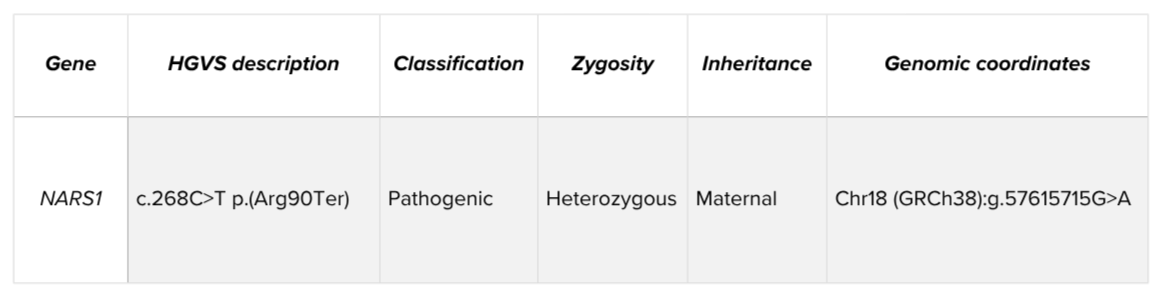
A report may include a table that looks something like this:

Example genetic report table - NARS1 Disorder

At first glance this looks complicated, but each part is simply describing a different aspect of the variant.

Let’s break it down.


Understanding the HGVS variant description

The variant description follows international rules called HGVS nomenclature.

Although it looks technical, it usually contains two key parts:

  • a DNA-level change

  • a protein-level change

Example:

NARS1 c.268C>T p.(Arg90Ter)


The protein-level change

The part starting with p. describes what happens to the protein that the gene normally produces.

Proteins are made of building blocks called amino acids, which are written using three-letter codes.

Example:

p.(Arg90Ter)

This means:

  • Arg – arginine, the amino acid that was supposed to be at this position

  • 90 – the position within the protein

  • Ter – a stop signal

So this tells us:

"At position 90, arginine has been changed into a stop signal."

This type of change is called a nonsense or stop-gain variant.

Because the instructions stop early, the protein may be incomplete and unable to function properly.

Sometimes the stop signal is written as:

  • Ter

  • *

  • X

They all mean the same thing.

The DNA-level change

The part starting with c. describes the change in the DNA sequence of the gene.

Example:

c.268C>T

This can be broken down as:

  • c. – this tells us we are looking at the coding DNA sequence

  • 268 – the position in the gene where the change occurs

  • C>T – the DNA letter C has been replaced by T

So this means:

"At position 268 in the NARS1 gene, the letter C has been replaced by T."

You might also see other endings at the DNA level such as:

  • del – deletion (letters removed)

  • ins – insertion (letters added)

  • dup – duplication (letters copied)

  • delins – letters deleted and replaced with different ones

For example:

c.250_253del

This means the letters at positions 250–253 have been deleted.


Other protein changes you might see

Frameshift variant

Example:
p.Lys84Serfs*12

This means:

  • lysine at position 84 becomes serine

  • the reading frame of the protein shifts

  • a stop signal appears 12 amino acids later

A frameshift is a bit like removing a letter in the middle of a sentence, everything after that point is read incorrectly.

For proteins, this usually results in a shortened and non-functional protein.

Missense variant

Example:
p.Arg412Gly

This means arginine has been replaced by glycine at position 412.


Deletion

Example:
p.Lys84del

This means the amino acid lysine at position 84 has been removed.


How to read your variant

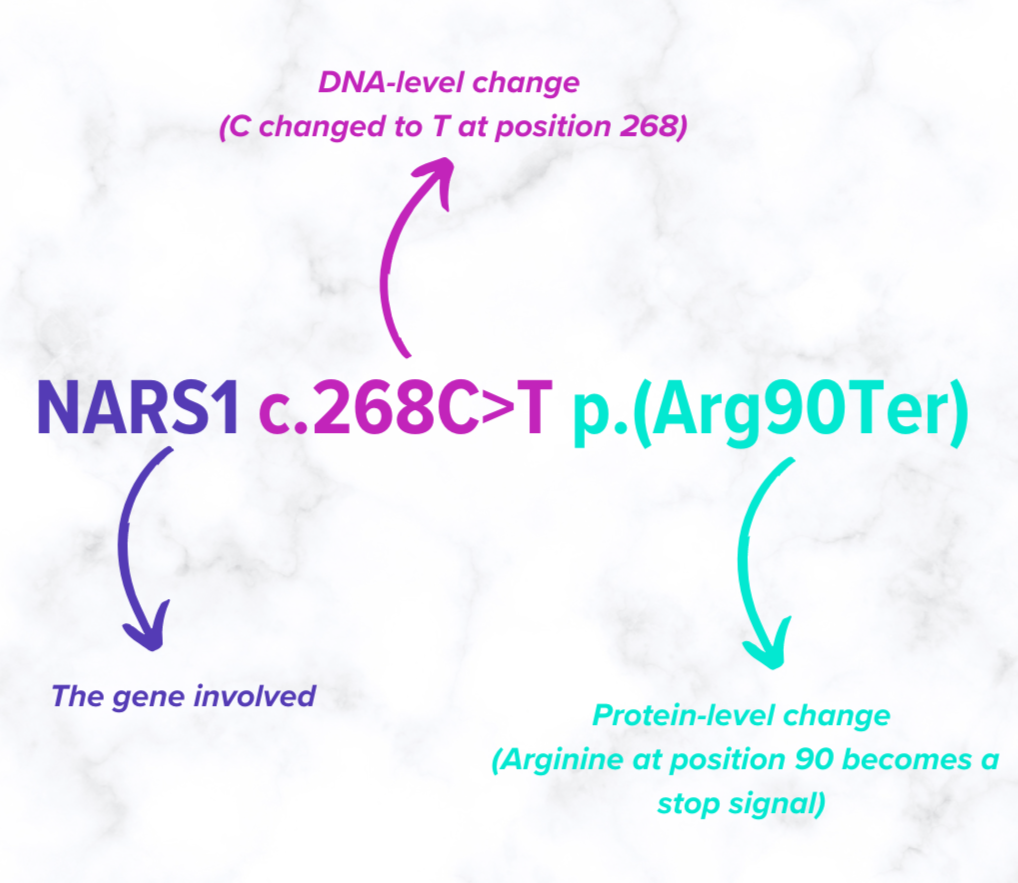
How to read your NARS1 variant on your genetic report illustration

Now that you have all of this information, how do you use it to read and understand your variant?

This diagram highlights the key pieces of a variant description so you can quickly see what each part means.

Example:

NARS1 c.268C>T p.(Arg90Ter)

  • NARS1 – the gene involved

  • c.268C>T – the DNA-level change

  • p.(Arg90Ter) – the protein-level change


Understanding the other elements in your report

Zygosity: how many copies are affected

The report will also describe how many copies of the gene contain the variant.

Common terms include:

Heterozygous
One copy of the gene has the variant and the other does not.

Homozygous
Both copies of the gene contain the same variant.

Compound heterozygous
Each copy of the gene contains a different variant.

Many children with NARS1 disorder are compound heterozygous: two heterozygous variants — one in each copy of the gene.


Inheritance: where the variants came from

The report may also indicate where the variants came from. This requires to have parental DNA sequenced together with the child’s.

For example:

  • Maternal – inherited from the mother

  • Paternal – inherited from the father

  • De novo – new in the child and not present in either parent in somatic cells

Both inherited and de novo variants are seen in NARS1 families.


Classification: what scientists think the variant means

Genetic laboratories also assign a classification, which reflects their current understanding of the variant.

Common categories include:

  • Pathogenic - Disease-causing.

  • Likely pathogenic - Very likely disease-causing.

  • Variant of Uncertain Significance (VUS) - Scientists do not yet know if the variant causes disease.

  • Likely benign / benign - Unlikely to cause disease.

Because NARS1 disorder is extremely rare and still being studied, uncertain classifications are quite common.

This can feel unsettling, but it simply reflects that science is still learning.

As more families are identified and more research is done, some variants may be reclassified over time.

This is one of the reasons the Rory Belle Foundation works closely with families and researchers around the world — sharing information helps improve understanding of NARS1.


Genomic coordinates: the genome’s GPS location

Some reports also include something called genomic coordinates, which might look like this:

Chr18 (GRCh38):g.57615715G>A

This describes the exact same genetic change, but using the full human genome map.

Breaking it down:

  • Chr18 – the variant is located on chromosome 18

  • GRCh38 – the version of the human reference genome used by the lab.

  • g.57615715G>A – at position 57,615,715 on that chromosome, the DNA letter G has changed to A

You can think of this as the GPS coordinates of the variant within the human genome.

Scientists and laboratories use this information to make sure they are discussing the exact same genetic change when sharing data and research.

Parents generally do not need to use this line in everyday life, but it can appear in reports so it is helpful to recognise it.


You do not need to understand everything

Genetic reports are complex, even for professionals.

It is completely normal for parents to feel overwhelmed when reading them for the first time.

Understanding just a few key pieces of information, such as the gene name, the variant description, and the classification, can already make a report feel much more manageable.

If you would like to learn more about NARS1 disorder itself, you can read our guide:


We are here to help

If you are unsure what your child’s report means, please remember that you are not alone.

The Rory Belle Foundation is here to support families at every stage — from diagnosis through to understanding the science behind NARS1.

Sometimes the first step is simply having someone help explain the report in plain language.

Please get in touch if you need support


Final word - How your child’s genetic report can support research

As you begin to understand your child’s genetic report, you may also hear about its role in research.

Taking part in research is always a personal choice, but for families who do want to get involved, the genetic report can play an important role.

Your child’s report helps researchers:

  • Understand exactly which variant your child has
    This allows research teams to design studies, tests and potential therapies tailored to specific genetic changes, without families needing to remember complex variant details.

  • Include your child in research platforms and natural history studies
    These studies help build a clearer picture of how NARS1 affects children over time, which is essential for developing future treatments.

  • Better understand inheritance patterns
    Where variants are inherited, this information can help researchers use parent samples as comparisons in the lab, strengthening the quality of research.

Over time, this shared knowledge helps move research forward, bringing us closer to better understanding NARS1 and developing future treatments.

If you’d like to learn more about how to get involved, you can visit our - Natural History Studies page

There is never any pressure to take part, but if you are interested, the Rory Belle Foundation can guide you through the options.


Next
Next

NARS1 Family Stories - The Lo Re Family, Italy